
Rehearse a presentation for clarity, not memorization
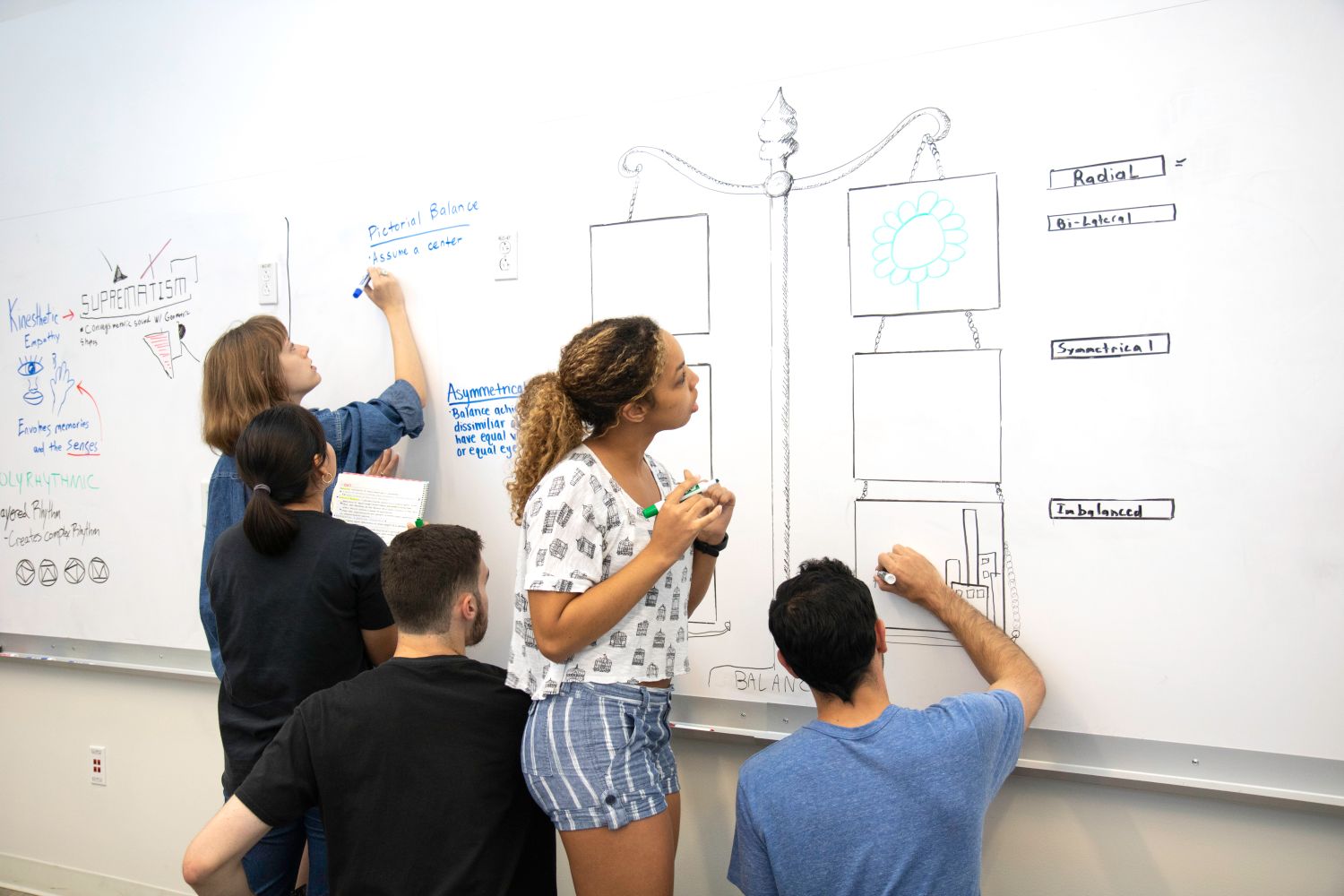
A rehearsal can show where an explanation loses its thread. Practice the route through your ideas, check the timing and prepare to answer a question without relying on a memorized script.
Write the route in three sentences
Before rehearsing, write the question your presentation answers, the main point you want the audience to understand and the evidence you will use. These three sentences form a route through the talk. If you cannot connect them, adjust the structure before spending time on transitions or visual polish.
Check the assignment instructions for the time limit, required content and any rules about questions or group participation. A short presentation may need one well-explained example rather than several examples delivered too quickly. Choose the scope deliberately so that the conclusion follows from what the audience has actually heard.
Speak through the difficult connection
Run through the talk aloud using brief notes. Notice where you need a sentence to explain why a slide follows the previous one. A list of slide titles can look organized while the spoken connection remains unclear. Write a short signpost for that transition, then try the section again in your own words.
When explaining a figure, identify what the audience should look at before interpreting it. Say what the labels mean and which comparison matters to your point. Do not assume that a chart communicates the same conclusion to everyone merely because it appears on screen.
Use timing as feedback on scope
Time a complete rehearsal at a pace that allows you to explain the material. If it runs long, remove a secondary point or shorten an example rather than speeding up every sentence. If it is too short, inspect whether you have skipped the reasoning between the evidence and the conclusion. More slides are not automatically the answer.
For a group presentation, rehearse handovers as well as individual sections. Decide who introduces a new speaker and how the next section connects. Check that people use key terms consistently and that the final conclusion reflects the whole presentation.
Prepare for a question you cannot answer
Ask a practice listener to tell you what they understood and where they wanted more explanation. Invite one question about the main claim. You can also generate a question yourself by looking for an assumption or limitation in your argument. Practice answering within what your evidence supports.
If you do not know an answer, say which part you can address and which part would need checking. That is more useful than improvising a confident claim. Finish by checking the practical setup, including the file version, display format and any permitted backup. A rehearsal should leave you with a clearer explanation and a manageable plan for delivering it.
Try this, one step at a time
- Write the question, main point and evidence in three sentences.
- Rehearse aloud and revise one unclear transition.
- Time the full talk and practice a question about its limits.
Original editorial ideas, published March 14, 2026. These are optional experiments to adapt to your circumstances, not promises of a particular result.